




1 Samaria Gorge:
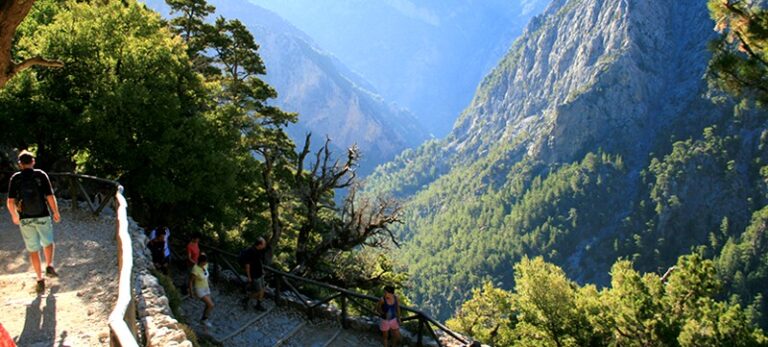
Samaria Gorge is one of the longest gorges in Europe, at an incredible 16km in length. The area, located in the Southwest near Chania, is a national park, a haven for wildlife and plant enthusiasts. Due to poor weather, the gorge is impassable primarily in winter, and so the walk can only be done in the summer when the weather is fine. The walk begins at Xyloskala at 1250m in the White Mountains and ends at Agia Roumeli, where you can either take public transport back to the start point or into Chania. Advice is to allow 5-6 hours for the walk, and although this may seem long, it is worth every second.
2 Chania Old Town & Harbour:
Crete was the island where European civilisation began around 7000 BC, before the Minoan civilisation ruled the island and the surrounding areas between 2700 BC and 1450 BC. Knossos was the core of this civilisation and is nowadays the largest preserved Minoan palace. The palace is the former home of King Minos, who, according to ancient tales, slayed the minotaur (half man, half bull) in the labyrinth.

3 Ancient Knossos:
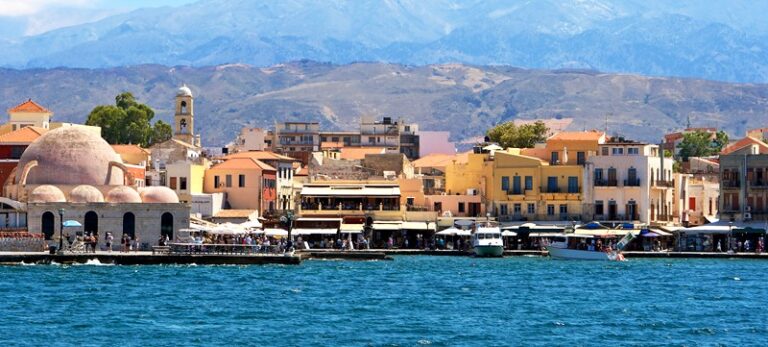
Chania is located in the northwest of the island and stands on the ancient site of Kydonia, which was a thriving Roman city. Chania boasts a charming old town with many winding alleyways to enjoy, perfect for getting lost in before stumbling upon some extremely unique Cretan handicraft shops. The beautiful Venetian Harbour has many fantastic bars and restaurants to while away an evening watching the world go by. As well as just strolling around and enjoying the surroundings of this wonderful town/city, there are two fantastic museums, the Archaeological Museum and the Maritime Museum.
4 Lake Kournas:
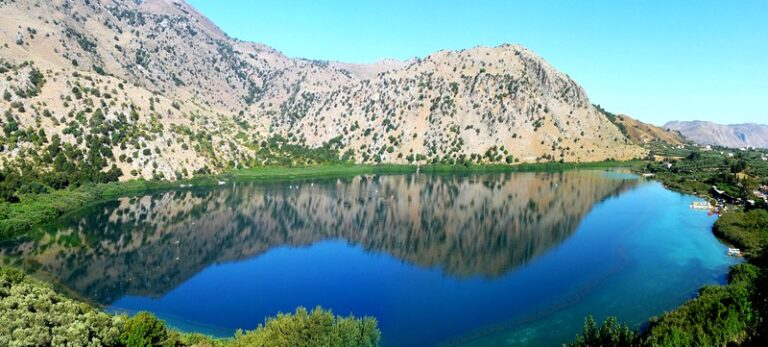
Lake Kournas, the only freshwater lake in Crete, is a site of incredible natural beauty. Sitting amongst fields and forests with the White Mountains in the background, the views from the lake are postcard-perfect. Around the lake, there are various tavernas perfect for taking a swim in the summer or hiring a pedalo to explore more of the great lake.

5 Lassithi Plateau:
The massive fertile plain of Lassithi Plateau, in the Diktian Mountains, covers an impressive 25,000 square kilometres. The plateau is most recognisable for its covering of white windmills that were installed to help irrigate the fields. If you do take a trip to the Lassithi Plateau, you should also visit the nearby Dikition Cave, which is believed to be the birthplace of Zeus. The cave is about a 30-minute walk up a steep path and contains some incredible stalactites and stalagmites.


