Our phone lines are open from {{opening_hours}}
Home > Middle East > Jordan > Petra
Petra is Jordan’s most iconic attraction and one of the world’s greatest archaeological treasures. Recognised as one of the New Seven Wonders of the World, this extraordinary UNESCO World Heritage Site draws visitors from around the globe with its remarkable history, breathtaking scenery, and ancient rock-carved architecture.
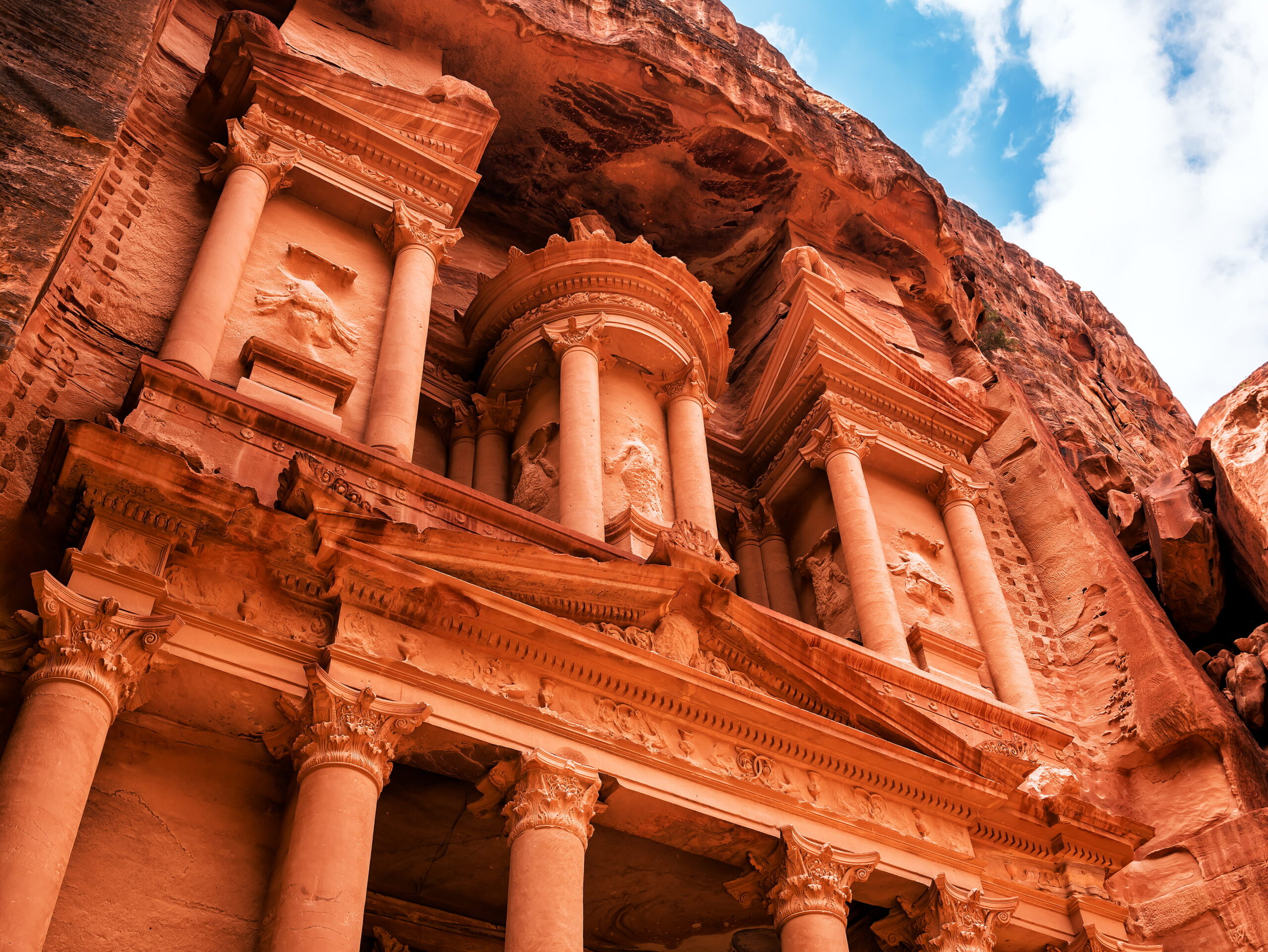
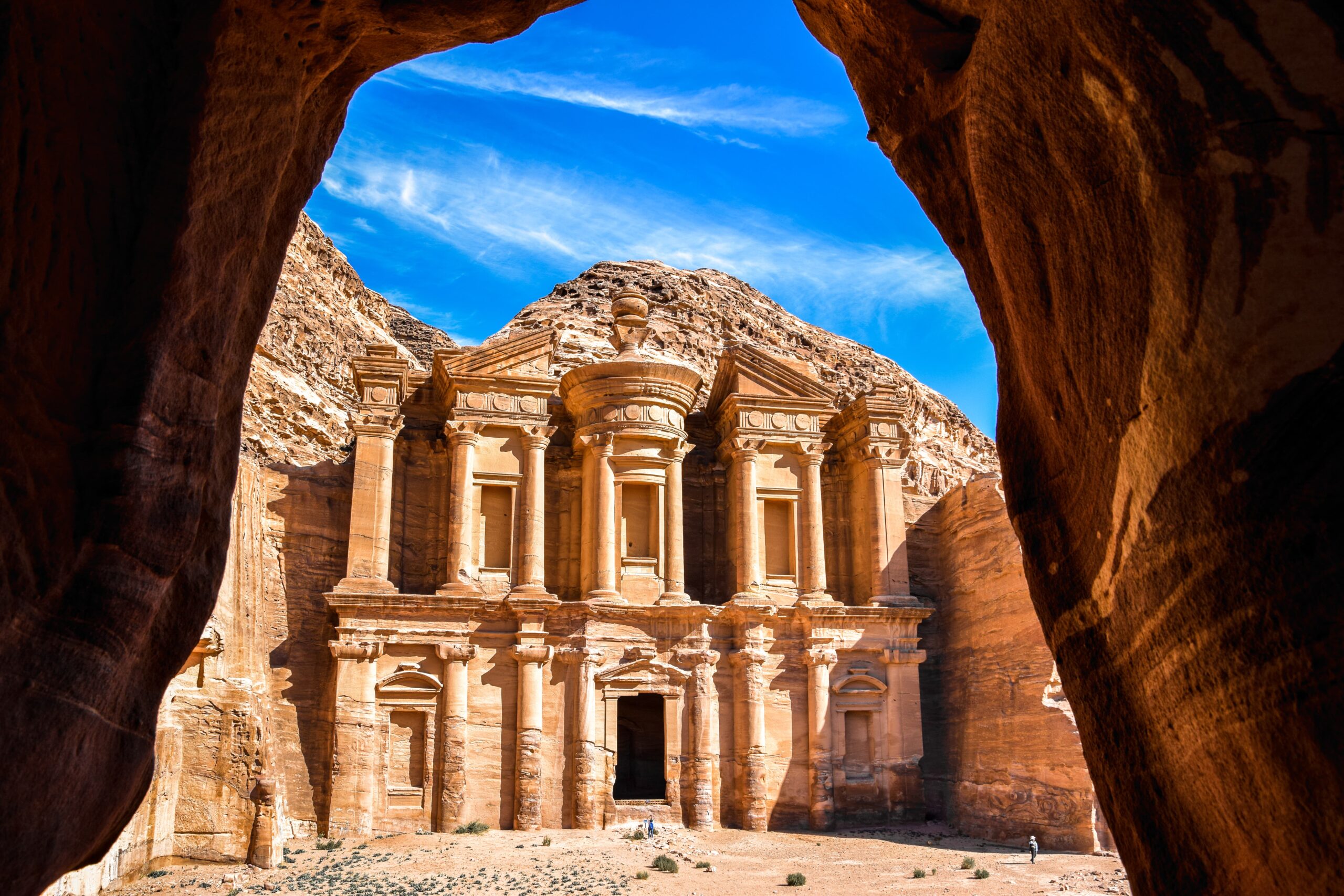
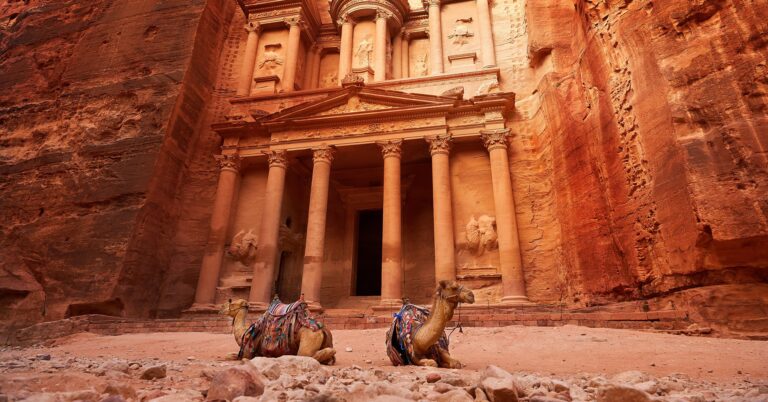
Once the thriving capital of the Nabataean Kingdom, Petra is renowned for its magnificent monuments carved directly into rose-red sandstone cliffs. The journey begins in the dramatic Siq, a narrow canyon that stretches over a kilometre, leading to the spectacular Treasury (Al-Khazneh), one of the most photographed landmarks in the Middle East. Beyond this famous façade, visitors can explore an extensive network of temples, tombs, amphitheatres, and ancient pathways that showcase the ingenuity of one of the most fascinating civilisations of the ancient world.
Surrounded by rugged mountains and stunning desert landscapes, Petra offers a unique blend of history, culture, and natural beauty. Visitors can spend hours discovering hidden trails, panoramic viewpoints, and remarkable archaeological sites that reveal the city’s rich heritage and enduring mystery.
A highlight of any trip to Jordan, Petra can be visited as part of a guided tour, a multi-centre itinerary, or a day excursion from nearby destinations, including Aqaba. Whether you’re a history enthusiast, a cultural explorer, or a first-time visitor to Jordan, Petra provides an unforgettable experience and remains one of the world’s most extraordinary ancient cities.
Located between Jerusalem and Amman, and approximately halfway between Damascus and the Red Sea, it has served as a trading hub for much of its history. Nicknamed the “Rose City” for the distinctive colour of the stones used in its buildings, it is an ideal destination for anyone interested in history.
It was designated a UNESCO World Heritage Site in 1985 and remains Jordan’s most popular tourist destination.
This unique location combines natural extremes to create an unusual climate. Situated on a mountain in the middle of a desert, it experiences hot summers and cool winters.
The ideal times to visit are between April and June, and between September and October, when the heat is less oppressive than the intense temperatures of July and August. Additionally, winter evenings can be quite cool, owing to the combination of the mountains and desert.
Its long history dates back to around 10,000 BC, though recorded history records the Nabateans, a Bedouin tribe, establishing it as a trading post. After Alexander the Great’s death in 312 BC, the city was attacked by the Greeks, who saw it as a valuable addition to their empire because of its immense wealth. However, its mountainous location enabled the Bedouins to repel the attackers, and they built the famous mountain walls that still stand today.
The city was eventually conquered by the Romans in 106 AD and remained under their rule until the 4th century, when a major earthquake severely damaged many of its buildings. The Byzantines then took control, but the city fell into disrepair in the 8th century and was largely abandoned.
In 1812, the city was rediscovered by the Swiss explorer Johann Ludwig Burckhardt, who disguised himself as a Bedouin to gain access. This rediscovery drew considerable attention from Western scholars, who began excavating the ancient city. In the 2000s, it was named one of the “Seven New Wonders of the World” and is now recognised as a UNESCO World Heritage Site of great significance.
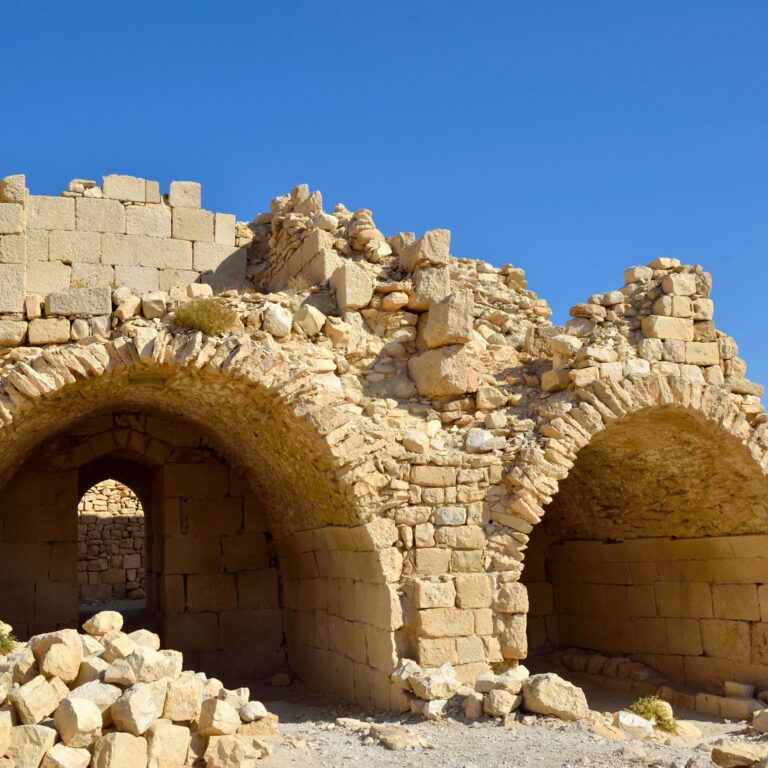
Any child interested in history is likely to be captivated by Petra’s incredible abandoned city, carved into the mountainside. The site is sure to inspire awe. Another excellent option for children is Shobak Castle, built by the Crusaders. Its well-preserved state brings history to life, making the stories feel real and engaging.
This ancient wonderland takes you back in time to a civilisation renowned for its impressive skills. The entire city, a UNESCO World Heritage Site, is carved into a towering mountain face and tinged with red, earning it the nickname “Rose City.”
Visitors can marvel at the remarkable carvings in the Royal Tombs, enjoy the stunning views from the High Place of Sacrifice, and experience the dramatic mountain gates known as the Siq. Together, these elements create an unforgettable experience that will stay with you forever.
Request a Call Back
If you would like to book Package for more than 35 days, then Please contact us on 0800 xxx xxxx